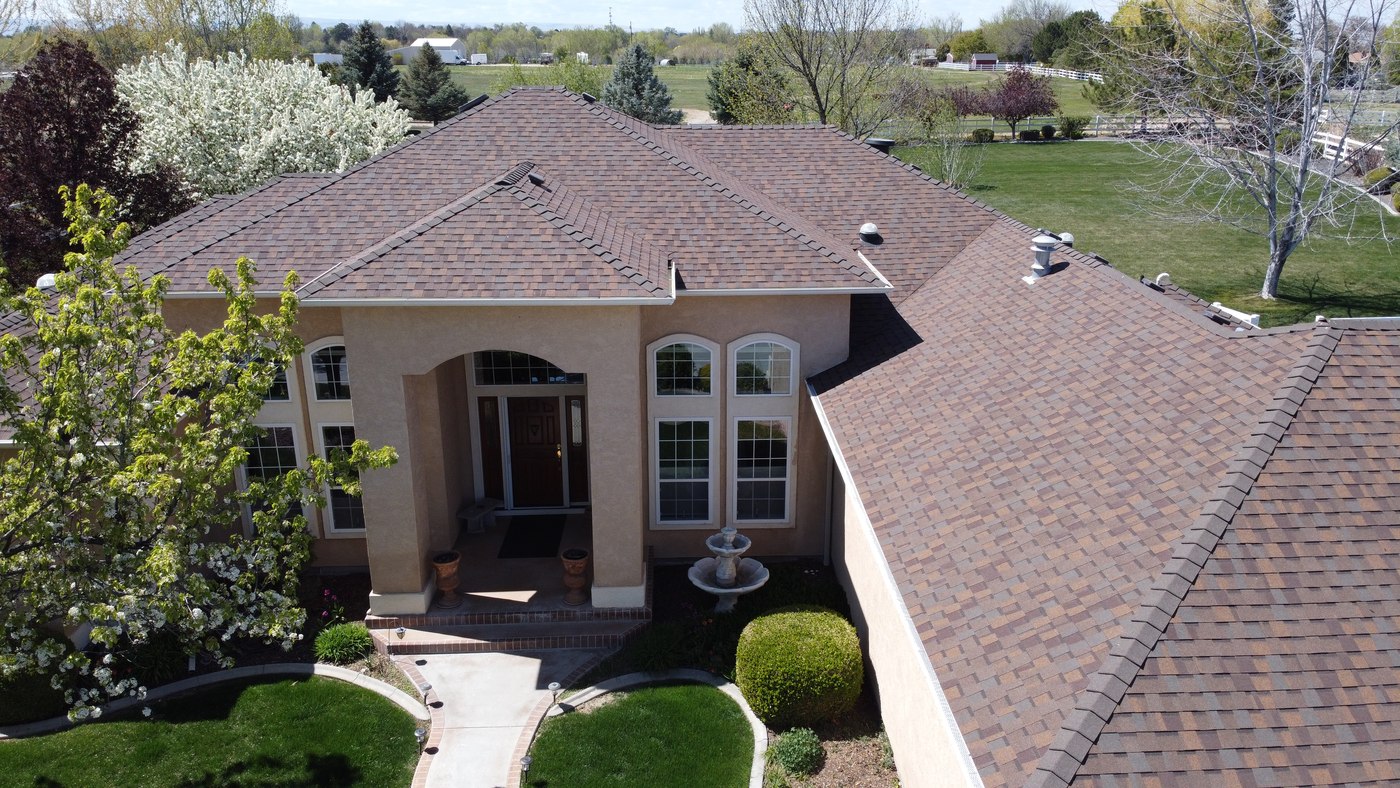
A roof that looks fine from the street can be actively failing underneath. Flashing gaps, compromised seals around penetrations, and early granule loss are invisible from the ground and painless until they're not. Annual maintenance catches those problems when they're still inexpensive to fix.
In Boise's climate specifically, the case for annual maintenance is stronger than in most of the country. Roughly 206 sunny days worth of UV exposure degrades asphalt binders year-round. Freeze-thaw cycling during shoulder months works at flashing seals and shingle adhesion. Periodic hail strips granules. None of these stressors announce themselves. They accumulate quietly until a rainstorm finds the gap that's been developing for two years.
What a thorough maintenance inspection covers
Eaves, fascia, and soffits are the first thing we check because they're the most accessible indicator of what's happening at the roof perimeter. Rot, pest activity, and paint failure here often signal moisture that's been coming in from above.
Flashing is where most Treasure Valley roofs fail first. Every transition point on your roof -- chimney base, skylight perimeter, wall-to-roof junctions, pipe boots, valley intersections -- is sealed with metal flashing. Idaho's freeze-thaw cycling stresses those seals constantly. A flashing gap that's a quarter-inch wide in October can be an inch wide by March after a winter of thermal movement.
Shingle condition tells us where the roof is in its life cycle. We look for granule loss, curling at edges or corners, buckling in the field of the shingle, cracking on south-facing slopes that receive the most UV exposure, and any areas where shingles have lifted or lost their factory seal.
Gutters and drainage affect roofing more than most homeowners realize. Clogged gutters hold water against the fascia and create the conditions for ice dams in winter. We check gutter attachment, clearance of debris, and proper slope toward downspouts.
Attic ventilation is assessed from inside. Inadequate ventilation accelerates shingle deterioration from below through heat buildup in summer and moisture accumulation in winter. This is the most commonly overlooked cause of premature roof failure throughout Ada and Canyon County.
Why Boise's climate makes annual inspections more important than elsewhere
The combination of stressors Boise roofs face is unusual. Other climates have harsh winters. Other climates have high UV. Few combine both with periodic hail events and the specific freeze-thaw pattern of Idaho's high desert winters. A roof in Seattle ages differently than a roof in Phoenix. Boise manages to have characteristics of both.
This means the national guidance of "inspect every few years" understates what Treasure Valley roofs actually need. The homes in Boise, Meridian, Nampa, and Canyon County that we've maintained consistently are the ones that reach the upper end of their rated lifespan. The ones we first see after a decade of no professional attention are rarely in the condition their age alone would suggest.
What maintenance costs versus what deferred maintenance costs
Annual maintenance typically runs $150 to $300 for most Boise homes, depending on size and complexity. Minor repairs identified during that visit -- resealing lifted flashing, replacing a handful of damaged shingles, clearing debris from valleys -- usually add a few hundred dollars at most.
A leak that's been running into an attic for two years before being discovered typically means damaged insulation, potential mold remediation, and sometimes structural repairs to decking or framing. That bill starts in the thousands and can reach much higher depending on where the water traveled.
The math favors maintenance by a wide margin. Blue Goat Roofing provides annual maintenance for homeowners throughout Boise, Meridian, Eagle, and Nampa. Every visit includes a written report of conditions found and any repairs recommended, with no pressure to proceed with work that isn't necessary.