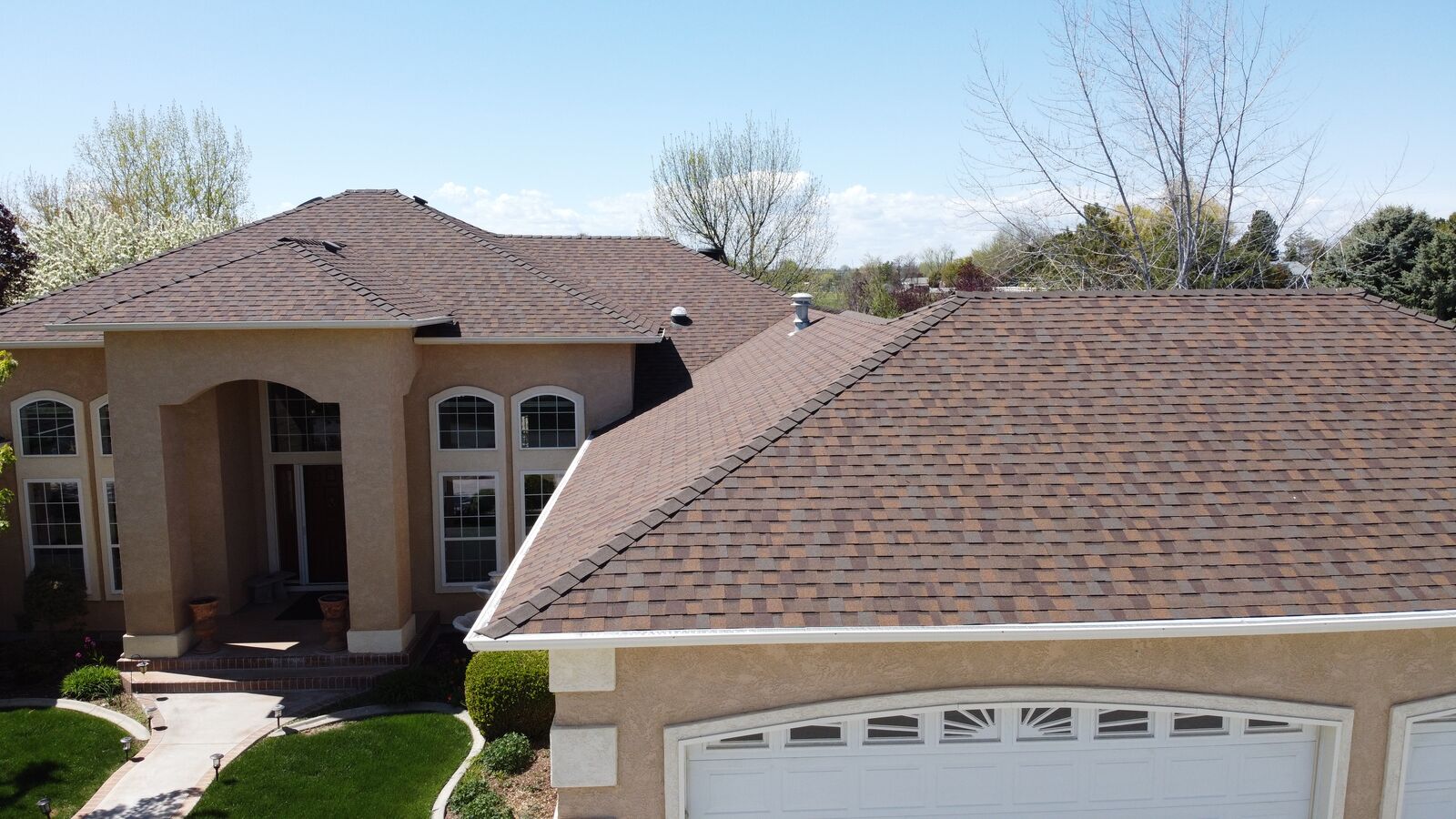
Boise has a significant inventory of homes with original wood shake roofs, particularly in established neighborhoods on the Bench, in the North End, and in older Meridian subdivisions. As these roofs age out, homeowners face a decision: replace with new cedar shake, or upgrade to a modern material that delivers similar aesthetics without the maintenance demands or shortened lifespan that wood shake brings in Idaho's climate.
The case against replacing with cedar shake
New cedar shake installs beautifully. The problem is what happens over the following decade in Boise's specific climate conditions.
Wood shake in The Treasure Valley deteriorates faster than in the Pacific Northwest climates where cedar shake roofing has a long track record. Idaho's combination of high UV exposure -- roughly 206 sunny days per year -- and freeze-thaw cycling through fall and spring creates a particularly harsh environment for wood. Without consistent treatment every three to five years, cedar shake in Boise and Nampa commonly develops splitting, moss infiltration, and structural deterioration within 10 to 15 years rather than the 30-year lifespan the material can achieve in ideal conditions.
The maintenance requirement is real and consistent. Most homeowners who tell us they plan to maintain a new cedar shake roof properly end up not doing so, not because of intention but because life intervenes. A material that requires periodic professional treatment to reach its rated lifespan is a different commitment than a material that performs without intervention.
Modern alternatives that match the aesthetic
Composite shake shingles are the closest visual match to cedar shake available in a low-maintenance product. Manufacturers like DaVinci Roofscapes produce composite products that replicate wood shake's irregular profile and texture closely enough to satisfy most Eagle HOA requirements and maintain the aesthetic character of homes where wood shake is architecturally significant. Composite shake carries Class A fire ratings and warranties of 50 years, and requires no treatment or maintenance beyond the normal periodic inspections any roof deserves.
Architectural asphalt shingles in a wood-look or heavy-shadow profile are a less expensive alternative that doesn't achieve the same visual accuracy as composite shake but still represents a significant upgrade from standard flat architectural profiles. For Meridian homes where aesthetic matching is important but budget is a consideration, this is often the practical middle ground.
Standing seam metal is worth considering for homeowners who are comfortable departing from the wood shake aesthetic entirely. In mountain properties and on certain contemporary Boise homes, metal's clean profile is a natural fit and the 40 to 50 year lifespan eliminates the replacement cycle question for the foreseeable future.
Blue Goat Roofing can show you material samples for all of these options on any estimate visit. Seeing the profiles and textures in person on your own home's context -- against your siding and trim colors, in the actual light conditions of your property -- is a better decision-making tool than photos.